La riprogrammazione cellulare porta alla creazione di reti neurali con caratteristiche delle cellule umane / Cellular Reprogramming Leads to the Creation of Neural Networks with Characteristics of Human Cells
La riprogrammazione cellulare porta alla creazione di reti neurali con caratteristiche delle cellule umane / Cellular Reprogramming Leads to the Creation of Neural Networks with Characteristics of Human Cells
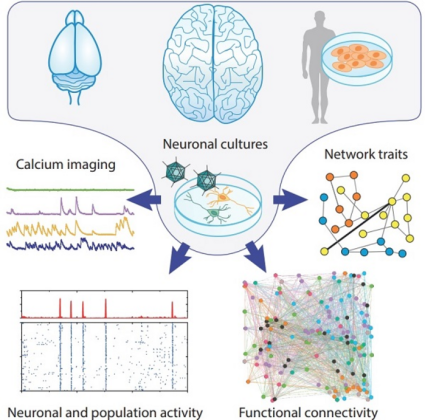
I ricercatori hanno utilizzato le registrazioni del livello di calcio intracellulare per confrontare le proprietà delle colture neuronali generate con la tecnologia di riprogrammazione cellulare da cellule umane con quelle ottenute da roditori e cervelli umani. / Researchers used intracellular calcium level recordings to compare the properties of neuronal cultures generated with cell reprogramming technology from human cells with those obtained from rodent and human brains.
Gli scienziati riferiscono di aver utilizzato una metodologia di riprogrammazione cellulare per consentire la creazione di reti neurali che riproducono caratteristiche uniche delle cellule umane, diverse da quelle ottenute dalle cellule dei roditori, con dinamiche temporanee che ricordano lo sviluppo del cervello umano.
I ricercatori, che hanno pubblicato il loro studio (" L'imaging del calcio a lungo termine rivela lo sviluppo funzionale nelle colture derivate da iPSC comparabili alle colture primarie umane ma non di ratto ") in Stem Cells Reports , ritengono che i modelli cellulari basati su cellule umane riprogrammate potrebbero favorire lo sviluppo di nuove terapeutiche nella lotta alle neuropatie riducendo contemporaneamente l'uso di animali in laboratorio.
Nonostante condividano gran parte del nostro genoma con la maggior parte dei mammiferi, "esistono notevoli differenze tra le nostre cellule e quelle di altre specie come i roditori, che vengono utilizzati come modelli animali per la maggior parte delle patologie", ha osservato Daniel Tornero, PhD, del dipartimento di biomedicina presso l'Università di Barcellona. “In particolare, ci sono differenze significative nel cervello, soprattutto in termini di organizzazione e connettività. Questo rende le nostre capacità cognitive così diverse e spiega anche perché i difetti che danno origine alle patologie che colpiscono il nostro cervello non si riproducono allo stesso modo nel cervello di questi animali».
I limiti degli studi sui modelli animali potrebbero essere superati dalla tecnologia di riprogrammazione cellulare, basata sull'induzione di cellule staminali pluripotenti umane (hiPSC). Questa è una tecnica in grado di generare colture di qualsiasi tipo cellulare dalle cellule di una persona adulta con il potenziale per l'applicazione clinica nella terapia cellulare e nella medicina rigenerativa.
Nell'ambito dello studio, il gruppo ha applicato la tecnica delle registrazioni del livello di calcio intracellulare per confrontare le proprietà delle colture neuronali generate con la tecnologia di riprogrammazione cellulare da cellule umane con quelle ottenute da roditori e cervelli umani. Questo metodo fornisce una misura indiretta dell'attività neuronale: durante l'impulso nervoso, che viene trasmesso da un neurone all'altro, i livelli di calcio aumentano in modo caratteristico e possono essere registrati dai sensori di calcio intracellulari.
Il sistema consente il monitoraggio ad alta risoluzione dell'attività neuronale in modo dinamico per tutta la vita della cultura. La strategia sperimentale si completa con l'utilizzo di piastre speciali che consentono il tracciamento dello stesso gruppo di cellule mediante segni incorporati nella superficie di coltura, una tecnica che riduce al minimo le variabili e genera risultati più affidabili e preziosi per lo studio delle reti neurali.
Differenze tra diversi circuiti neurali
Secondo quanto riferito, per la prima volta, il gruppo è stato in grado di studiare e differenziare le caratteristiche dei diversi circuiti neuronali generati, strutture biologiche che a prima vista potrebbero sembrare identiche. I risultati mostrano che i neuroni di origine umana si comportano diversamente quando si tratta di generare circuiti neurali da un punto di vista funzionale. Queste caratteristiche possono in parte spiegare i problemi associati ai modelli animali utilizzati per studiare le patologie del cervello umano.
“Innanzitutto ciò che colpisce di più è la scala temporale che determina la generazione e la maturazione della rete neurale. Le colture derivate da cellule umane mostrano un comportamento dinamico ricco e graduale in modo che il processo di maturazione della rete neuronale generata sia chiaramente osservato da 20 giorni a 45 giorni di coltura”, ha aggiunto Tornero. "Durante questo periodo, e grazie ai diversi descrittori che abbiamo sviluppato, siamo stati in grado di analizzare come la rete neurale acquisisce complessità nel tempo, man mano che i neuroni umani diventano sempre più connessi tra loro", hanno aggiunto i ricercatori.
Inoltre, i neuroni umani sono in grado di stabilire connessioni molto più lunghe all'interno della cultura, una proprietà che sarebbe determinata dalla loro biologia, poiché il cervello umano è molto più grande di quello dei roditori.
"Tuttavia, i circuiti neurali generati dalle cellule dei roditori mostrano un comportamento monotono da tempi brevi, con pochi cambiamenti durante la loro evoluzione", ha spiegato Tornero.
I modelli cellulari basati su cellule umane riprogrammate stanno emergendo come un importante passaggio intermedio tra gli studi sugli animali e le applicazioni cliniche. La generazione di questi modelli cellulari per lo studio di malattie basate su cellule umane riprogrammate è ben consolidata negli studi preclinici (colture 2D o sistemi organ-on-chip) e più recentemente, nella generazione di sistemi 3D basati sull'uso di biomateriali, organoidi o bioprinting.
Nella medicina rigenerativa, l'applicazione di questa tecnologia nelle strategie di terapia cellulare rivela grandi potenzialità e sono numerosi gli studi clinici su diverse patologie (diabete di tipo 1, infarto del miocardio, lesioni del midollo spinale, degenerazione maculare, morbo di Parkinson, ecc.). Stabilire protocolli sicuri ed affidabili e generare banche cellulari compatibili con i diversi gruppi allogenici esistenti nella popolazione sono alcune delle sfide più ambiziose in questo campo di studio.
“Questi nuovi approcci possono essere preziosi per validare diverse terapie in fase preclinica, soprattutto quando si studiano patologie che interessano processi complessi basati sull'organizzazione di circuiti neuronali (malattie del neurosviluppo, disturbi dello spettro autistico, patologie neurodegenerative, ecc.)”, ha proseguito Tornero.
“Inoltre, la riprogrammazione cellulare basata sull'induzione di cellule staminali pluripotenti umane permetterebbe di generare modelli paziente-specifici e, utilizzando strumenti di gene editing (come la tecnica CRISPR/Cas9), sarebbe possibile ottenere cellule di controllo in che modo la mutazione che causa la patologia viene corretta", hanno concluso i ricercatori.
I ricercatori dell'Università di Lund in Svezia hanno contribuito allo studio.
ENGLISH
Scientists report that they have used a cellular reprogramming methodology to allow the creation of neural networks that reproduce unique characteristics of human cells—different from those obtained from rodent cells—with temporary dynamics that recall human brain development.
The researchers, who published their study (“Long-term Calcium Imaging Reveals Functional Development in iPSC derived Cultures Comparable to Human but not Rat Primary Cultures”) in Stem Cells Reports, believe cellular models based on reprogrammed human cells could boost the development of novel therapies in the fight against neuropathies while simultaneously reducing the use of animals in the lab.
Scientists report that they have used a cellular reprogramming methodology to allow the creation of neural networks that reproduce unique characteristics of human cells—different from those obtained from rodent cells—with temporary dynamics that recall human brain development.
The researchers, who published their study (“Long-term Calcium Imaging Reveals Functional Development in iPSC derived Cultures Comparable to Human but not Rat Primary Cultures”) in Stem Cells Reports, believe cellular models based on reprogrammed human cells could boost the development of novel therapies in the fight against neuropathies while simultaneously reducing the use of animals in the lab.
Scientists report that they have used a cellular reprogramming methodology to allow the creation of neural networks that reproduce unique characteristics of human cells—different from those obtained from rodent cells—with temporary dynamics that recall human brain development.
The researchers, who published their study (“Long-term Calcium Imaging Reveals Functional Development in iPSC derived Cultures Comparable to Human but not Rat Primary Cultures”) in Stem Cells Reports, believe cellular models based on reprogrammed human cells could boost the development of novel therapies in the fight against neuropathies while simultaneously reducing the use of animals in the lab.
Despite sharing a large part of our genome with most mammals, “there are considerable differences between our cells and those of other species such as rodents, which are used as animal models for most pathologies,” noted Daniel Tornero, PhD, from the department of biomedicine at the University of Barcelona. “In particular, there are significant differences in the brain, especially in terms of organization and connectivity. This makes our cognitive capacities so different and it also explains why the defects that give rise to the pathologies that affect our brains are not reproduced in the same way in the brains of these animals.”
The limits of animal model studies could be overcome by cell reprogramming technology, based on the induction of human pluripotent stem cells (hiPSCs). This is a technique that can generate cultures of any cell type from the cells of an adult person with the potential for clinical application in cell therapy and regenerative medicine.
As part of the study, the team applied the technique of intracellular calcium level recordings to compare the properties of neuronal cultures generated with cell reprogramming technology from human cells with those obtained from rodent and human brains. This method provides an indirect measure of neuronal activity: during the nerve impulse, which is transmitted from one neuron to the next, calcium levels rise in a characteristic way and can be recorded by intracellular calcium sensors.
The system allows high-resolution monitoring of neuronal activity dynamically throughout the life of the culture. The experimental strategy is completed with the use of special plates that allow the tracking of the same group of cells by means of marks incorporated into the culture surface, a technique that minimizes variables and generates more reliable and valuable results for the study of neural networks.
Differences between different neural circuits
Reportedly, for the first time, the team has been able to study and differentiate the characteristics of the different neuronal circuits generated, biological structures that at first glance might appear identical. The results show that neurons of human origin behave differently when it comes to generating neural circuits from a functional point of view. These characteristics may partly explain the problems associated with animal models used to study human brain pathologies.
“First of all, what strikes us most is the time scale that determines the generation and maturation of the neural network. The cultures derived from human cells show a rich and gradual dynamic behavior so that the maturation process of the neuronal network generated is clearly observed from 20 days to 45 days of culture,” added Tornero. “During this period, and thanks to the different descriptors that we have developed, we have been able to analyze how the neural network gains in complexity over time, as the human neurons become more and more connected to each other,” the researchers added.
In addition, human neurons are able to make much longer connections within the culture, a property that would be determined by their biology, since the human brain is much larger than that of rodents.
“However, neural circuits generated from rodent cells show monotonic behavior from short times, with little change throughout their evolution,” explained Tornero.
Cellular models based on reprogrammed human cells are emerging as a relevant intermediate step between animal studies and clinical applications. The generation of these cellular models for the study of diseases based on reprogrammed human cells is well established in preclinical studies (2D cultures or organs-on-chip systems) and more recently, in the generation of 3D systems based on the use of biomaterials, organoids, or bioprinting.
In regenerative medicine, the application of this technology in cell therapy strategies reveals great potential and there are many clinical trials on various pathologies (type 1 diabetes, myocardial infarction, spinal cord injury, macular degeneration, Parkinson’s disease, etc.). Establishing safe and reliable protocols and generating cell banks compatible with the different allogeneic groups that exist in the population are some of the most ambitious challenges in this field of study.
“These new approaches can be valuable to validate different therapies preclinically, especially when studying pathologies that affect complex processes based on the organization of neuronal circuits (neurodevelopmental diseases, autism spectrum disorder, neurodegenerative pathologies, etc.),” continued Tornero.
“In addition, cell reprogramming based on the induction of human pluripotent stem cells would make it possible to generate patient-specific models and, using gene editing tools (such as the CRISPR/Cas9 technique), it would be possible to obtain control cells in which the mutation that causes the pathology is corrected,” the researchers concluded.
Researchers from the University of Lund in Sweden contributed to the study.
Da:
https://www.genengnews.com/topics/translational-medicine/cellular-reprogramming-leads-to-the-creation-of-neural-networks-with-characteristics-of-human-cells/?MailingID=%DEPLOYMENTID%&utm_medium=newsletter&utm_source=GEN+Daily+News+Highlights&utm_content=01&utm_campaign=GEN+Daily+News+Highlights_20221227&oly_enc_id=8653B6936723E0S


Commenti
Posta un commento